🎒 Quick Pack: Point Reyes Essentials
Links to REI — we may earn a commission at no cost to you.
📡 Current Conditions
Updated June 10, 2026⌛ Refreshed every 60 minutes from NPS, NWS, and local news sources
⚠️ Active Alerts
BEACH HAZARD STATEMENT in effect through June 11 — NWS warns of dangerous surf, strong rip currents, and sneaker waves along the Point Reyes coastline. Large breaking waves of 14–19 feet. Stay out of the water and keep a safe distance from the surf zone.
Read full alert on NPS.gov →Drakes Beach Elephant Seal Colony — year-round closure in effect at the western end of Drakes Beach. The southern portion of Drakes Beach (south of the Kenneth C. Patrick Visitor Center, towards Chimney Rock) remains closed through mid-June to protect molting elephant seals. Male elephant seals continue to haul out June–July for molting. Additional temporary closures may be in effect based on seal activity. Maintain a safe distance from all wildlife.
Read full alert on NPS.gov →Harbor Seal Pupping Closures in effect March 1–June 30 — Drakes Estero, Estero de Limantour, and Double Point closed to protect harbor seal pups through June 30. Duck Island and east side of Hog Island closed year-round.
Read full alert on NPS.gov →Western Snowy Plover protections in effect March 1–September 30 — Point Reyes Beach between North Beach and South Beach: no pets allowed. Abbott's Lagoon breeding areas: all public use prohibited on weekends and holidays through Labor Day. Weekend beach closure between North Beach parking lot and mouth of Abbott's Lagoon in effect Memorial Day through Labor Day.
Read full alert on NPS.gov →🥾 Trail Updates
- Point Reyes Trails Forever initiative underway — the most ambitious trail-planning effort in park history aims to reimagine the entire 150+ mile trail system. Public survey open through late 2026.
- More than 50 miles of internal fencing on former ranchlands to be removed as part of Trails Forever planning, opening new areas for potential future trail access.
- Sky Campground is open and accepting reservations via Recreation.gov. Year-round, 24-hour access. Book well in advance — summer weekends sell out quickly.
- Palomarin Beach Trail (0.6-mile trail from Coast Trail to Palomarin Beach) closed until further notice due to unsafe, failing trail sections.
- Tomales Point Trail: last 1.7-mile northernmost section remains unmaintained with vegetation overgrowth and social trails. Bluff collapse risk at northern end — stay back from cliff edges.
- Alamea Trail closed due to active yellowjacket nests and downed trees (as of November 2025).
- Report trail hazards to Bear Valley Visitor Center (415-464-5100 x2 x5).
📰 Recent News
🌿 Seasonal Note
Summer fog season. Mornings are often overcast — afternoons may clear. Book well ahead for weekends. BEACH HAZARD STATEMENT in effect through June 11 — dangerous surf and rip currents. Harbor seal pupping closures in effect through June 30. Elephant seals: southern portion of Drakes Beach closed through mid-June for molting; males continue hauling out through July. Snowy plover nesting closures in effect on Point Reyes Beach through Labor Day. No drinking water at lighthouse area — bring your own. Kule Loklo area closed due to hazard trees. Sky Campground open and accepting reservations — book well in advance. Trails Forever public survey open for community input. The Nature Conservancy and Marin RCD stewarding 17,000 acres of former ranchland. Avian flu outbreak subsided in marine mammals. Ranchers from Point Reyes relocating to Sonoma County — three dairies restarting with county funding.
Last synced: 6/10/2026, 3:30 AM PT
Campgrounds
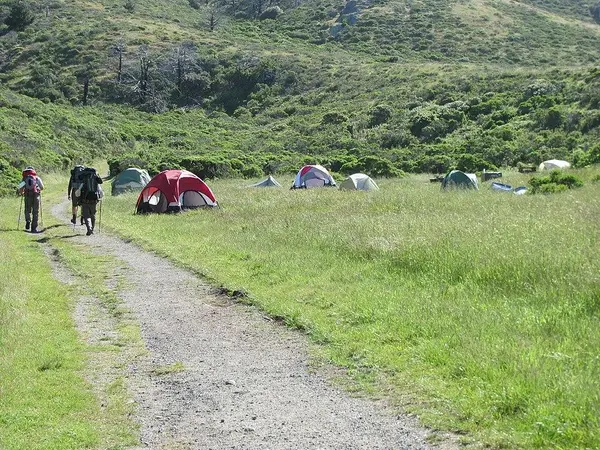
Point Reyes National Seashore offers four developed campgrounds, each with its own unique character:
| Campground | Hike In | Key Features | Best For | Notes |
|---|---|---|---|---|
| Coast Campground | 1.5 mi | Ocean views, sunsets, exposed to wind | Families & beginners wanting views | Sturdy tent required; dramatic but windy |
| Sky Campground | 1.4 mi | Forest, sheltered, eucalyptus grove | Those wanting protection from wind/fog | Cooler, quieter, above the marine layer |
| Glen Campground | 1.6 mi | Creekside, family-friendly, sheltered valley | Families and those seeking solitude | More protected; good hiking access |
| Wildcat Campground | 3.0 mi | Ridge-top, beach access, backpacking | Experienced hikers, Alamere Falls access | Longest approach; best for longer stays |
All campgrounds require reservations via Recreation.gov (facility 233359). Max 3 nights.
🥾 When to Leave?
Calculate hike time for your campground, pack weight, and start time.
Full calculator → includes sunset deadlines and gear recommendations.
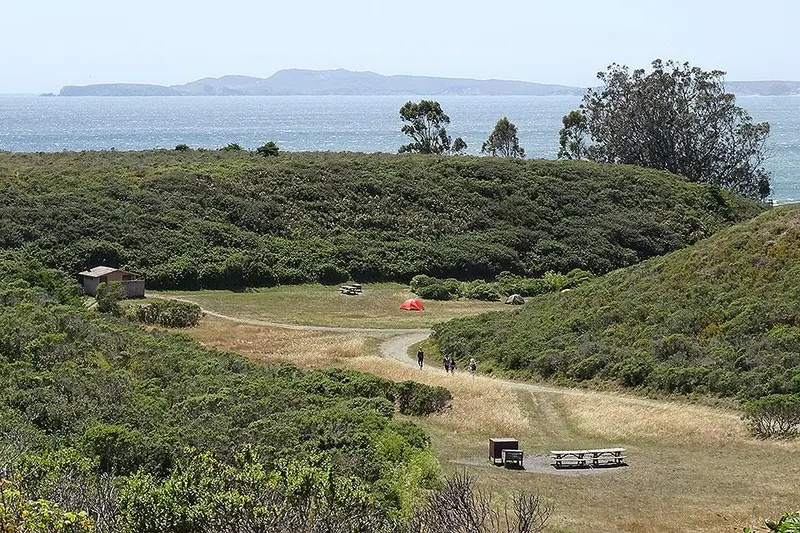
Coast Campground
Perched on bluffs overlooking the Pacific Ocean. Popular spot for watching sunsets and listening to the waves. Accessible via the Coast Trail from the South Beach parking lot.
Season note: Dramatic when the fog lifts for sunsets. Very exposed — secure your tent well.
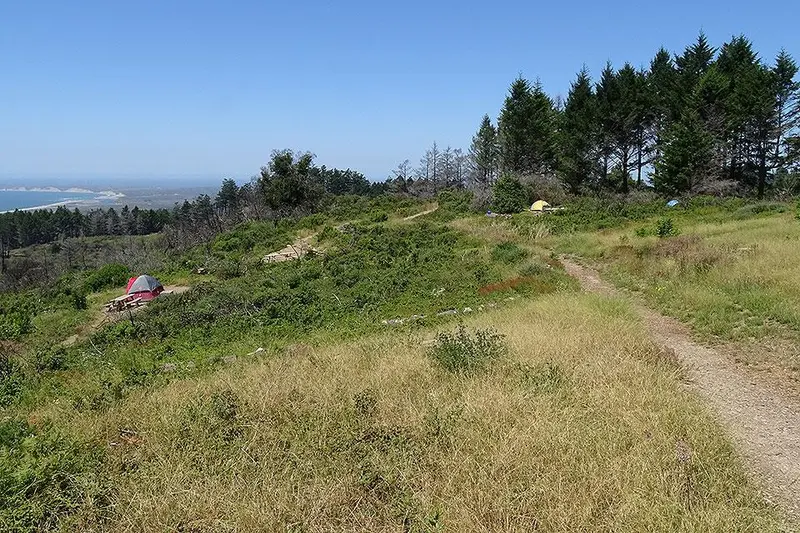
Sky Campground
Forest camping on an inland ridge. Sheltered from coastal winds with options for longer hikes through Bishop Pine forests.
Season note: Often above the fog layer. Cooler and more comfortable than coastal sites.
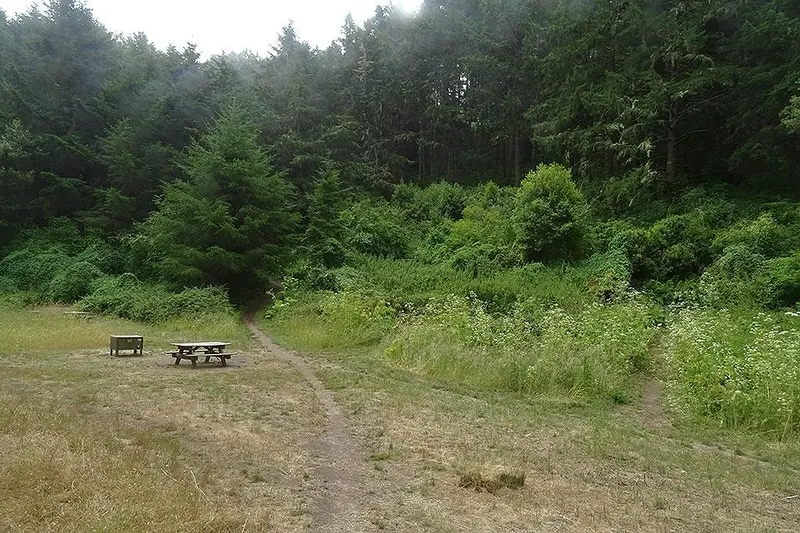
Glen Campground
Creekside valley camping — the most secluded of Point Reyes' four backcountry sites. Great for spotting wildlife and stargazing away from coastal fog.
Season note: Protected valley feels less foggy. Good choice for families in summer.
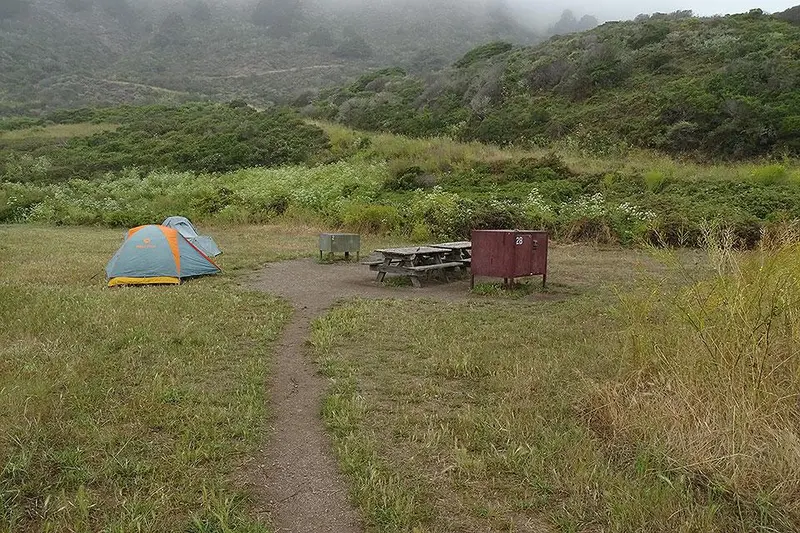
Wildcat Campground
Ridge-top camping with beach access. A favorite for its panoramic views and proximity to Alamere Falls.
Season note: Long daylight hours for the backpack in. Beach is beautiful when not foggy.
Reservations: All campgrounds require advance reservations through Recreation.gov. Sites book up quickly, especially for summer weekends.
Gear Essentials
Point Reyes coastal weather is unpredictable — come prepared!
Warm Layers
Fleece or wool layers are essential. Coastal fog and wind can drop temperatures quickly, even in summer.
💡 quick temp swings
Rain Gear
Waterproof jacket and pants. Weather can change rapidly—be ready for rain any time of year.
💡 unpredictable coast weather
Headlamp
Essential for nighttime navigation. Campsites and trails are unlit, and fog can roll in fast.
💡 no lights at campsites
Wind-Resistant Tent
Coastal winds can be strong. Bring a tent with good stakes and guylines.
💡 coastal gusts 30+ mph
Sleeping Bag (30°F or lower)
Coastal nights get cold. A bag rated for 30°F or lower is strongly recommended.
💡 nights dip into 40s
Water Containers
Potable water is available at campgrounds, but bring extra capacity for hikes and backup.
💡 carry extra for hikes
Bear Canister
Required for food storage in many areas. Mountain lions and bears are present.
💡 required by NPS
Links to REI, Marin Outdoor Trading Co., Amazon, and Backcountry may earn us a commission at no cost to you.
📋 Camping Tips
- Reservations: Open 6 months in advance and fill fast, especially for summer weekends.
- Water: Bring water containers. Potable water is available, but bring extra capacity for the duration of your stay and hikes.
- Pack Out: All trash. Leave No Trace—carry out everything you bring in. There are no trash services at most sites.
- Fog: The marine layer is common, especially in mornings and evenings during summer. Prepare for it.
- Tides: Check tide charts. Some trails (like to Wildcat Beach) require low-tide passage and can be dangerous at high tide.
- Fires: No fires or charcoal grills are permitted in most areas of Point Reyes National Seashore.
- Wildlife: Store food properly in bear canisters or vehicle. Mountain lions and black bears are present in the area.
More info: Visit the National Park Service website for official regulations and updates.
📸 Scenes from Point Reyes
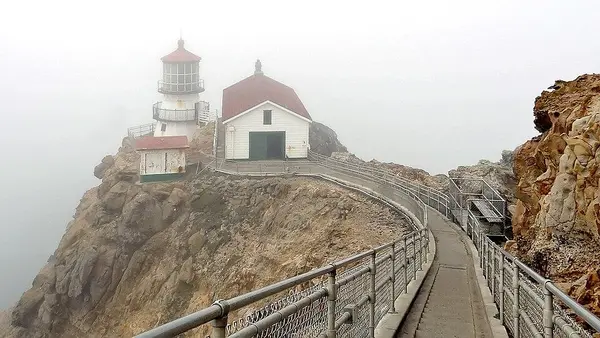 Point Reyes Lighthouse overlook Coast Campground at Point Reyes
 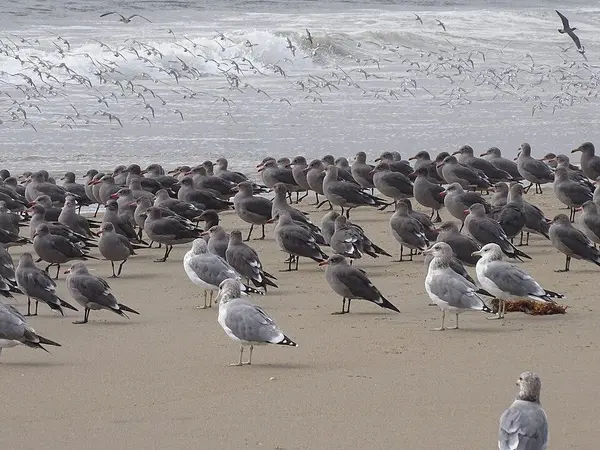 Gulls on a Point Reyes beach
 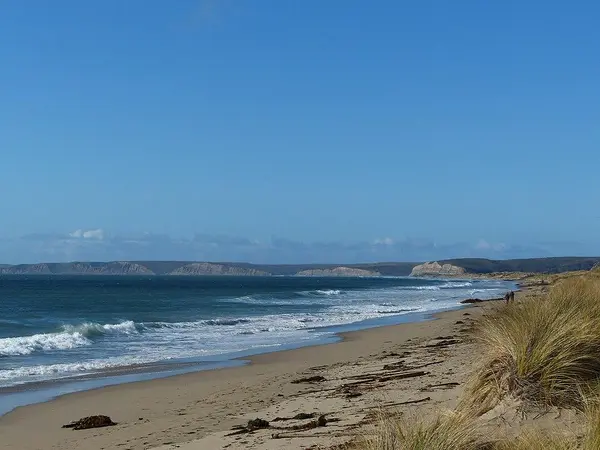 Drakes Bay view
 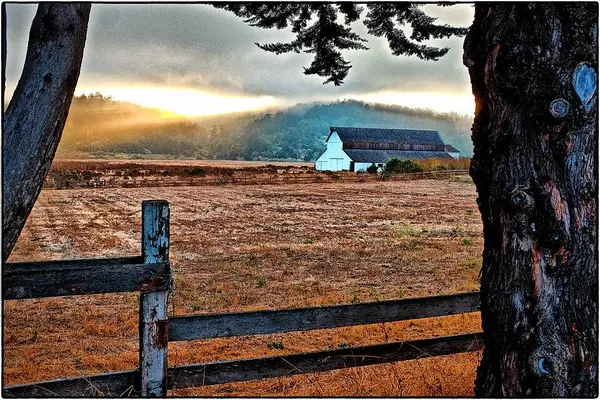 Historic barn wetlands
 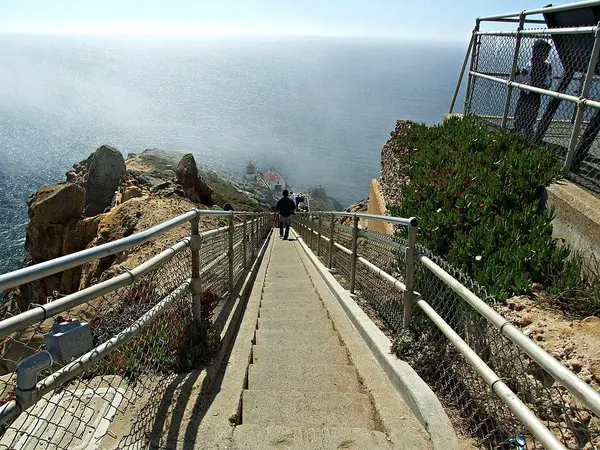 Point Reyes Lighthouse steps
 Images: Wikimedia Commons (CC BY-SA)
Point Reyes Camping — What You Need to Know
Q: What are the best campgrounds at Point Reyes?
Point Reyes National Seashore offers four hike-in campgrounds: Coast Campground (ocean bluffs, 1.5-mile hike, 3-night max), Sky Campground (forested ridge, 1.4-mile hike, 3-night max), Glen Campground (creekside valley, 1.6-mile hike, 3-night max), and Wildcat Campground (ridge-top with beach access, 3.0-mile hike, 3-night max). All require advance reservations through Recreation.gov.
Q: When is the best time to camp at Point Reyes?
Fall (September–October) offers the clearest, warmest weather with fewer crowds. Spring (March–May) brings wildflowers and whale migration but more fog. Summer is popular but often foggy and windy. Winter camping is possible for experienced campers with proper gear — you'll have the park nearly to yourself.
Q: What gear do I need for Point Reyes camping?
Essentials: warm layers (fleece/wool), waterproof rain gear, headlamp, wind-resistant tent with strong stakes, sleeping bag rated 30°F or lower, water containers, and a bear canister (required for food storage). Coastal weather changes rapidly — always pack for wind, fog, and rain regardless of forecast.
Q: How do I make reservations for Point Reyes campgrounds?
All four campgrounds require advance reservations through Recreation.gov (recreation.gov). Reservations open 6 months in advance and fill quickly, especially for summer weekends and holidays. Each campground allows a maximum stay of 3 nights. There are no first-come, first-served sites.
Q: What gear do I need for Point Reyes camping?
Essentials: warm layers (fleece/wool), waterproof rain gear, headlamp, wind-resistant tent with strong stakes, sleeping bag rated 30°F or lower, water containers, and a bear canister (required). Coastal weather changes rapidly — always pack for wind, fog, and rain regardless of forecast.
Q: Do I need a bear canister at Point Reyes?
Yes. Black bears and mountain lions are present in Point Reyes National Seashore. All food, toiletries, and scented items must be stored in an approved bear canister or in your vehicle. Bear canisters are available for rent at the Bear Valley Visitor Center if you don't own one. The BearVault BV500 is the most popular choice among Point Reyes campers.
Q: Are campfires allowed at Point Reyes?
No. Campfires and charcoal grills are not permitted at any Point Reyes backcountry campgrounds. Use a backpacking stove for cooking instead. This policy protects the sensitive coastal ecosystem and reduces wildfire risk.
Explore by Season
Tailored advice for different times of year: