🎒 Quick Pack: Point Reyes Essentials
Links to REI — we may earn a commission at no cost to you.
📡 Current Conditions
Updated September 03, 2026⌛ Refreshed every 60 minutes from NPS, NWS, and local news sources
⚠️ Active Alerts
Drakes Beach Elephant Seal Colony — year-round closure remains at the western end of Drakes Beach. The seasonal southern portion closure (December 15–mid-June) has now ended (past mid-June as of June 23). The NPS alert remains in their system though its stated closure window has passed — visitors should verify current status before visiting. The year-round elephant seal colony closure at the far western end remains permanently in effect. Maintain a safe distance from all wildlife.
Official details on NPS.gov →Harbor Seal Pupping Closures in effect March 1–June 30 — NOW ENDED as of July 1. Drakes Estero, Estero de Limantour, and Double Point were closed to protect harbor seal pups through June 30; all areas now fully accessible. Duck Island and east side of Hog Island remain closed year-round.
Official details on NPS.gov →Western Snowy Plover protections in effect March 1–September 30 — No pets allowed on Point Reyes Beach from North Beach parking lot to Kehoe Beach. Beach between North Beach and South Beach closed to all pet use March 29–July 20 (ended July 20). Abbott's Lagoon breeding areas: all public use prohibited on weekends and holidays through Labor Day. Weekend beach closure between North Beach parking lot and mouth of Abbott's Lagoon in effect Memorial Day through Labor Day. Kiteboarding and kite flying restrictions also in effect.
Official details on NPS.gov →California Department of Public Health annual mussel quarantine in effect May 1–October 31 — applies to all sport-harvested mussels along the California coast, including all bays and estuaries. Additionally, CDPH advises against consuming sport-harvested bivalve shellfish from Marin County due to detection of dangerous levels of paralytic shellfish poisoning (PSP) toxins. Cooking does not destroy the toxin.
Official details on NPS.gov →🥾 Trail Updates
Based on the most recent official advisories and recent hiker reports:
- Kule Loklo Trail is OPEN — NPS trail advisories page (updated November 19, 2025) lists Kule Loklo as OPEN. The NPS closures page (May 29, 2026) previously listed Kule Loklo as closed, but this closure text is now only inside HTML comments (<!-- ... -->), indicating NPS has rescinded it from active closures. Visitors should still verify current status before visiting.
- Peter Behr Overlook Trail and Peter Behr Overlook at Drakes Beach — the NPS closures page (May 29, 2026) had listed this as closed, but the closure text is now only inside HTML comments (<!-- ... -->), indicating NPS has rescinded it. The closures page no longer lists this as an active closure. Visitors should verify current status before visiting.
- Point Reyes Trails Forever initiative underway — the most ambitious trail-planning effort in park history aims to reimagine the entire 150+ mile trail system. Public survey open through late 2026.
- More than 50 miles of internal fencing on former ranchlands to be removed as part of TrailsForever planning, opening new areas for potential future trail access.
- All campgrounds now open — including Sky Campground (previously closed due to Woodward Fire). Reservations available via Recreation.gov. Book well in advance — summer weekends sell out quickly.
- Palomarin Beach Trail (0.6-mile trail from Coast Trail to Palomarin Beach) closed until further notice due to unsafe, failing trail sections.
- Tomales Point Trail: last 1.7-mile northernmost section remains unmaintained with vegetation overgrowth and social trails. Bluff collapse risk at northern end — stay back from cliff edges.
- Alamea Trail closed due to active yellowjacket nests and several large downed trees (as of November 2025).
- Kelham Beach Trail decommissioned — lowest 12 feet of steps eliminated by erosion. Route unstable; strongly unadvised.
- Sculptured Beach Trail decommissioned — lower section of steps eliminated by erosion from large winter storms. NPS will no longer maintain this trail. Access the beach from Coast Camp instead; using this former route is hazardous.
- Report trail hazards to Bear Valley Visitor Center (415-464-5100 x2 x5).
📰 Recent News
Show 38 more headlinesShow fewer headlines
🌿 Seasonal Note
Fall equinox (September 22). The best overall weather window — clear, warm days and crisp nights. Fewer crowds than summer but excellent conditions. 🍂 California Coastal Cleanup Day September 19 (10 AM — volunteer to…Show moreShow less
Fall equinox (September 22). The best overall weather window — clear, warm days and crisp nights. Fewer crowds than summer but excellent conditions. 🍂 California Coastal Cleanup Day September 19 (10 AM — volunteer to remove marine debris from Point Reyes beaches). 🅿️ Marin County studying summer weekend traffic/parking congestion in Point Reyes Station — plan extra time for parking or arrive early on busy weekends. Harbor seal pupping closures ended June 30. 🦦 2026 pup count was among the lowest in 27 years of monitoring (690 vs ~1,040 average) — coyote predation at Drakes Estero and Double Point plus a statewide decline; seals are adapting by relocating to safer haul-out sites. Elephant seal seasonal southern Drakes Beach closure (December 15–mid-June) has ended as of June 23; year-round western-end elephant seal colony closure remains permanently. 🐦 Western Snowy Plover protections in effect through September 30 — no pets allowed on Point Reyes Beach from North Beach parking lot to Kehoe Beach. Weekend beach closure between North Beach and South Beach in effect Memorial Day through Labor Day. Abbott's Lagoon breeding areas: all public use prohibited on weekends and holidays through Labor Day. All campgrounds open — book well ahead for fall weekends. ⚡ Beach Hazards Statement EXPIRED August 1 at 5:00PM PDT — no active beach hazard warnings. Kule Loklo Trail is OPEN (NPS trail advisories page confirms; closures page has old closure text only in HTML comments). Peter Behr Overlook Trail closure also only in HTML comments — likely rescinded. Verify before visiting. Lighthouse area drinking water alert has been removed from active content on the NPS conditions page (Nov 2025) — it now appears only inside HTML comments (rescinded by NPS). Not in the active NPS alerts JSON feed either. Bring water to be safe as the lighthouse area has limited facilities. 🏃 America 250 Coast-to-Coast Relay launched July 1 from Point Reyes — 6,800-mile relay carrying Declaration of Independence now underway; crossed the Golden Gate Bridge on July 4. Trails Forever public survey open for community input. The Nature Conservancy and Marin RCD stewarding 17,000 acres of former ranchland. 🦦 New rewilding report: 7 native species (sea otters, beavers, pronghorn) identified for potential reintroduction to Point Reyes. 🦦 New TIRN position paper (Aug 11) makes the case for reintroducing endangered southern sea otters to Drakes Estero — free of sharks and boat traffic, surrounded by protected wilderness, ideal first stepping stone for recovery. Avian flu outbreak subsided — no active health warnings. Ranchers relocating to Sonoma County with county funding. 🏠 Final ranching families departing Point Reyes by August 1 — 11 families across 12 properties bought out; more than 200 people relocated. FOIA emails reveal NPS celebrated exits internally. Local schools shrinking, farmers market struggling. Leases transferred to TNC for restoration and rewilding. 🏠 Temporary housing for displaced ranch workers opens at 'Calf Lot' in downtown Point Reyes Station — tenants move in as TNC/WMCS wraps up relocation payments to ~30 displaced households. CLAM + Marin County planning permanent affordable housing. CDPH annual mussel quarantine in effect May–October. NPS permit fees increased June 1: application fee now $100, plus new administrative fees for events/filming. Beach safety: stay off rocks and out of water during high-surf events. 🐟 Salmon fall reopening September 4–7 between Point Reyes and Point Sur (harvest guideline 7,500). 🦅 Brown pelicans splashing in bays; humpback whales visible from Great Beach and the lighthouse. 🌊 El Niño declared June 2026 — Super El Niño Town Hall (Aug 4) warns of record ocean warmth, possible strongest El Niño on record. Coastal flooding, bluff erosion, and King tides around Christmas are highest-confidence predictions for West Marin. Fall dry-lightning fire risk possible before rains arrive. Impacts peak Dec–Mar. Marine heat wave + El Niño convergence may bring warmer ocean temps through fall. 🪵 New Nature Notebook (August 20): Full Buck Moon rose Aug. 27 with partial lunar eclipse peaking 9:12 p.m. — Hazel moon; bay laurel and live oak nuts forming, both expected to ripen by end of September. Dawn chorus quieter as breeding season ends; some birds beginning migration to Central America. 🌟 Next Nature Notebook expected mid-September — check for moon phases, tide updates, and wildlife activity as fall progresses. 🏊 New cedar-top swimming docks at Heart's Desire and Shell Beaches in Tomales Bay State Park — useful for boat-in campers and kayakers. 💧 Creek swimming holes received poor marks for water quality — check conditions before swimming in local creeks.
Last synced: 9/3/2026, 8:07 PM PT
Compare the 4 Campgrounds
Point Reyes has four hike-in campgrounds. Use this comparison to choose, then open the full guide for trail details and booking.
| Campground | Hike In | Key Features | Best For | Guide |
|---|---|---|---|---|
| Coast Campground | 1.5 mi | Ocean views, sunsets, exposed to wind | Families & beginners wanting views | Full guide → |
| Sky Campground | 1.4 mi | Forest, sheltered, eucalyptus grove | Those wanting protection from wind/fog | Full guide → |
| Glen Campground | 1.6 mi | Creekside, family-friendly, sheltered valley | Families and those seeking solitude | Full guide → |
| Wildcat Campground | 3.0 mi | Ridge-top, beach access, Alamere Falls | Experienced hikers, overnight near the falls | Full guide → |
All campgrounds require advance reservations — how to book on Recreation.gov (facility 233359). Max 3 nights.
🥾 When to Leave?
Calculate hike time for your campground, pack weight, and start time.
Full calculator → includes sunset deadlines and gear recommendations.
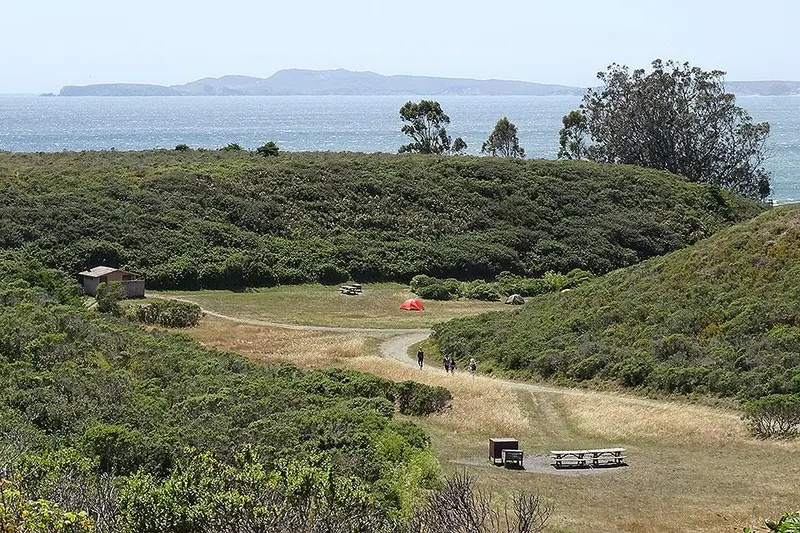
Coast Campground
Perched on bluffs overlooking the Pacific Ocean. Popular spot for watching sunsets and listening to the waves. Accessible via the Coast Trail from the South Beach parking lot.
Season note: Stunning clear views and sunsets. One of the best times to camp here.
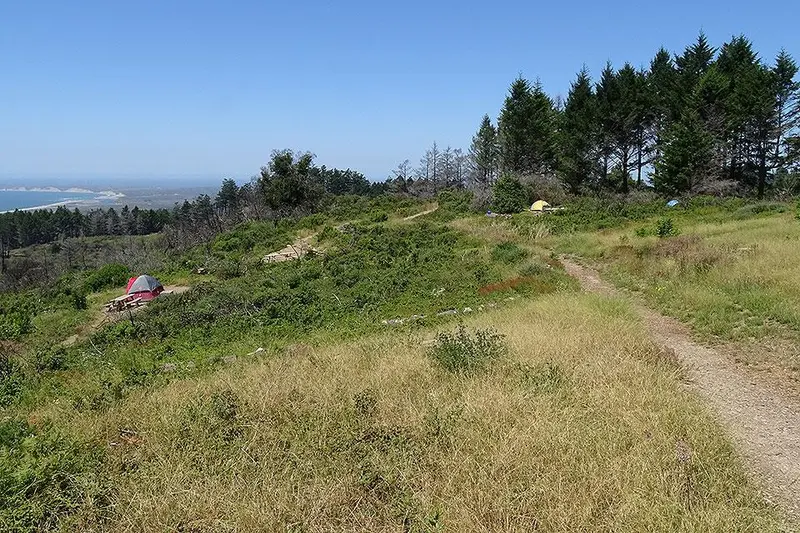
Sky Campground
Forest camping on an inland ridge. Sheltered from coastal winds with options for longer hikes through Bishop Pine forests.
Season note: Mild temperatures and beautiful light filtering through the trees.
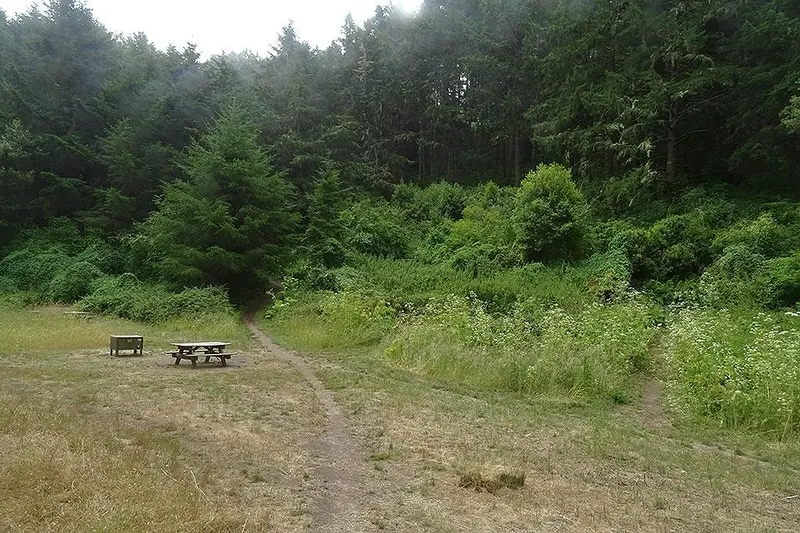
Glen Campground
Creekside valley camping — the most secluded of Point Reyes' four backcountry sites. Great for spotting wildlife and stargazing away from coastal fog.
Season note: Perfect hiking weather. Creek still has enough water for ambiance.
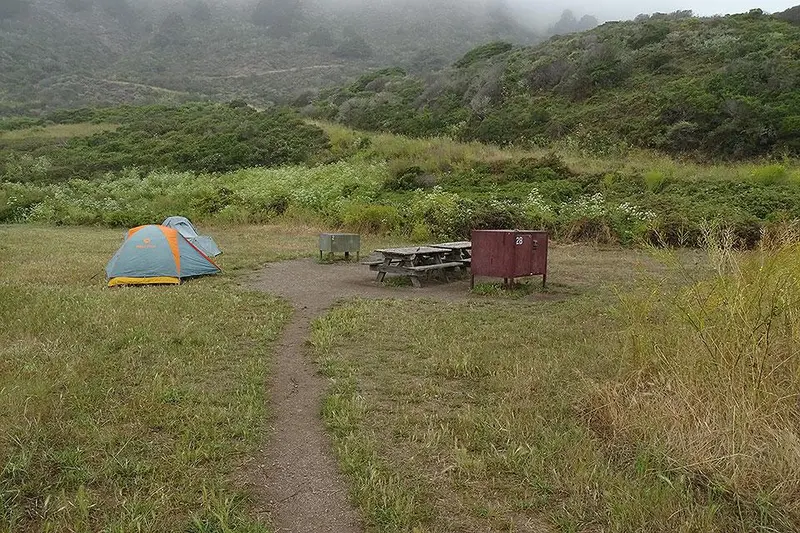
Wildcat Campground
Ridge-top camping with beach access. A favorite for its panoramic views and proximity to Alamere Falls.
Season note: Ideal backpacking conditions. The hike in is pleasant and the beach is often sunny.
Reservations: Required in advance — how to book or Recreation.gov. Sites book up quickly, especially for summer weekends.
Gear Essentials
Point Reyes coastal weather is unpredictable — come prepared! Hikers regularly report sudden fog and wind shifts even on clear days.
Warm Layers
Fleece or wool layers are essential. Coastal fog and wind can drop temperatures quickly, even in summer.
💡 quick temp swings
Rain Gear
Waterproof jacket and pants. Weather can change rapidly—be ready for rain any time of year.
💡 unpredictable coast weather
Headlamp
Essential for nighttime navigation. Campsites and trails are unlit, and fog can roll in fast.
💡 no lights at campsites
Wind-Resistant Tent
Coastal winds can be strong. Bring a tent with good stakes and guylines.
💡 coastal gusts 30+ mph
Sleeping Bag (30°F or lower)
Coastal nights get cold. A bag rated for 30°F or lower is strongly recommended.
💡 nights dip into 40s
Water Containers
Potable water is available at campgrounds, but bring extra capacity for hikes and backup.
💡 carry extra for hikes
Bear Canister
Required for food storage in many areas. Mountain lions and bears are present.
💡 required by NPS
Links to REI, Marin Outdoor Trading Co., Amazon, and Backcountry may earn us a commission at no cost to you.
📋 Camping Tips
- Reservations: Open 6 months in advance and fill fast, especially for summer weekends.
- Water: Bring water containers. Potable water is available, but bring extra capacity for the duration of your stay and hikes.
- Pack Out: All trash. Leave No Trace—carry out everything you bring in. There are no trash services at most sites.
- Fog: The marine layer is common, especially in mornings and evenings during summer. Prepare for it.
- Tides: Check tide charts. Some trails (like to Wildcat Beach) require low-tide passage and can be dangerous at high tide.
- Fires: No fires or charcoal grills are permitted in most areas of Point Reyes National Seashore.
- Wildlife: Store food properly in bear canisters or vehicle. Mountain lions and black bears are present in the area.
More info: Visit the National Park Service website for official regulations and updates.
📸 Scenes from Point Reyes
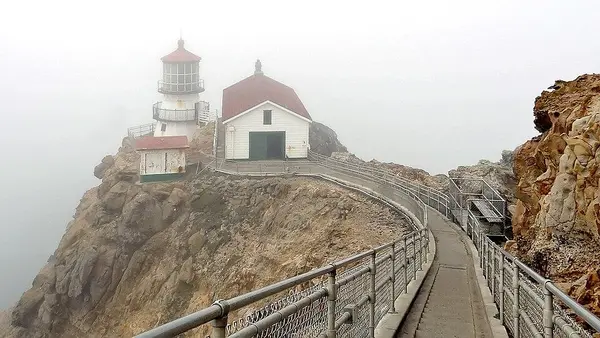 Point Reyes Lighthouse overlook
 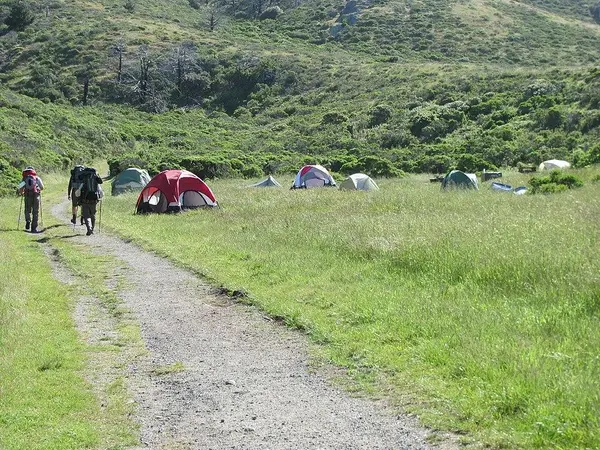 Coast Campground at Point Reyes
 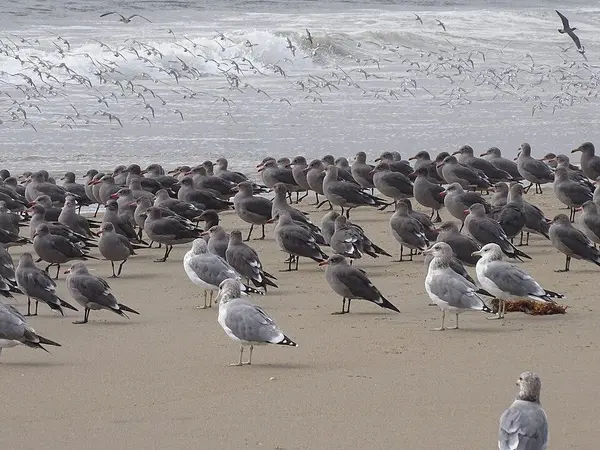 Gulls on a Point Reyes beach
 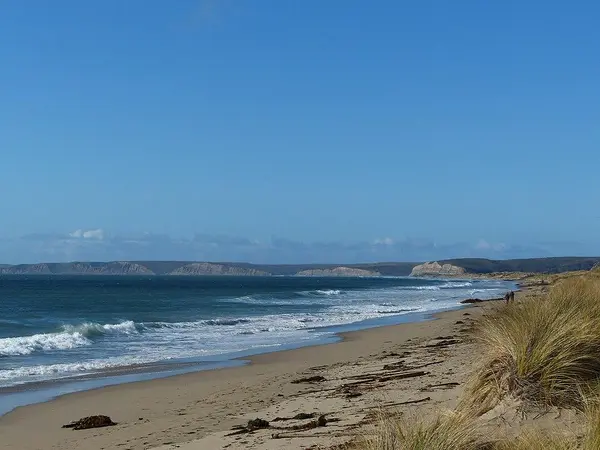 Drakes Bay view
 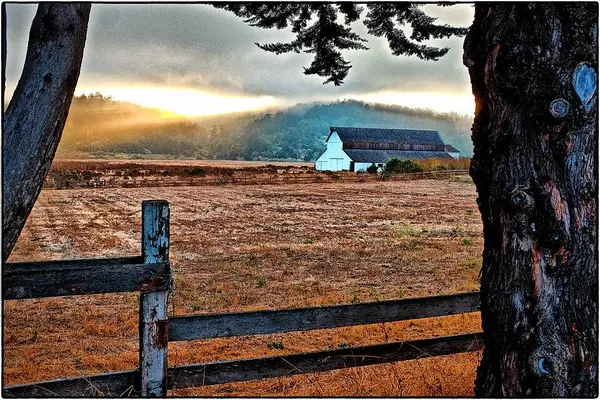 Historic barn wetlands
 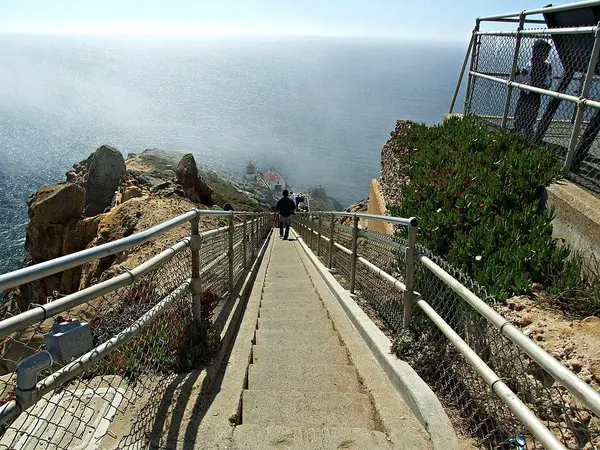 Point Reyes Lighthouse steps
 Images: Wikimedia Commons (CC BY-SA)
Point Reyes Camping — What You Need to Know
Q: What are the best campgrounds at Point Reyes?
Q: When is the best time to camp at Point Reyes?
Fall (September–October) offers the clearest, warmest weather with fewer crowds. Spring (March–May) brings wildflowers and whale migration but more fog. Summer is popular but often foggy and windy. Winter camping is possible for experienced campers with proper gear — you'll have the park nearly to yourself.
Q: How do I make Point Reyes camping reservations?
All four campgrounds book through Recreation.gov (facility 233359). Reservations open 6 months ahead, max stay is 3 nights, and there are no walk-ups. See the full Point Reyes camping reservations guide for steps and timing tips.
Q: What gear do I need for Point Reyes camping?
Essentials: warm layers (fleece/wool), waterproof rain gear, headlamp, wind-resistant tent with strong stakes, sleeping bag rated 30°F or lower, water containers, and a bear canister (required). Coastal weather changes rapidly — always pack for wind, fog, and rain.
Q: Do I need a bear canister at Point Reyes?
Yes. All food, toiletries, and scented items must be stored in an approved bear canister or in your vehicle. Bear canisters are available for rent at the Bear Valley Visitor Center.
Q: Are campfires allowed at Point Reyes?
No. Campfires and charcoal grills are not permitted at any Point Reyes backcountry campgrounds. Use a backpacking stove for cooking instead.
Explore by Season
Tailored advice for different times of year: